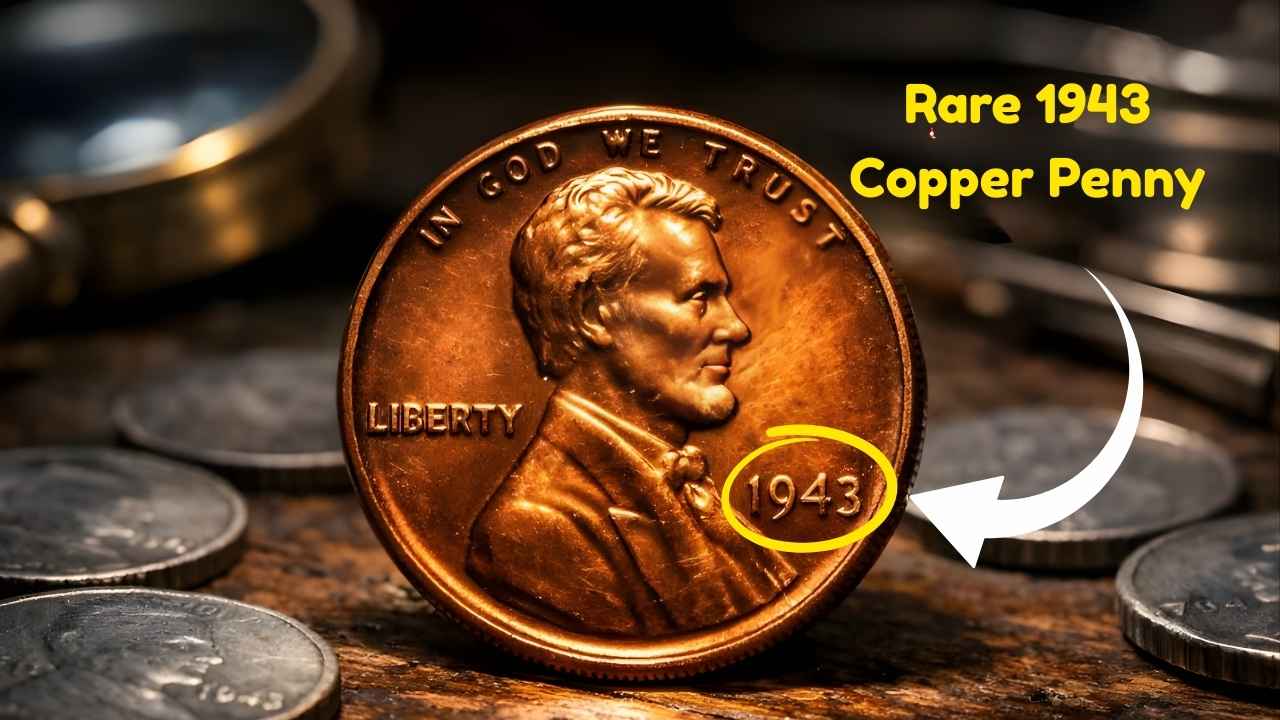
At first glance, the 1943 penny looks no different from the countless coins that pass through hands every day. Yet one extraordinary version of this humble one-cent coin has become one of the most valuable errors in American numismatic history. The rare 1943 copper penny has captured the imagination of collectors for decades, with confirmed examples selling for staggering sums. Its story blends wartime urgency, minting mistakes, and the enduring thrill of hidden treasure.
The Wartime Switch That Changed Everything
In 1943, the United States was deeply involved in World War II, and copper was a critical resource for ammunition and military equipment. To conserve metal, the U.S. Mint replaced the traditional copper alloy penny with one made of zinc-coated steel. More than a billion steel cents were produced that year, instantly changing the look and feel of everyday change.
This sudden shift set the stage for one of the most famous minting errors ever recorded. A small number of copper planchets from 1942 were accidentally left behind in the presses. When the 1943 pennies were struck, these leftover blanks were used, creating a coin that was never supposed to exist.
How the 1943 Copper Penny Was Born
The creation of the 1943 copper penny was not intentional. Mint employees were under pressure to produce massive quantities of coins quickly, and a few copper blanks slipped through unnoticed. These pennies were struck at different mints, including Philadelphia, Denver, and San Francisco, making them even more intriguing to collectors.
Because the error went unnoticed at the time, the coins entered circulation. Most were likely spent, lost, or worn down over the years. Only a handful are known to survive today, and each one has been carefully documented and authenticated.
Why This Penny Is So Rare
The rarity of the 1943 copper penny lies in both its accidental origin and its limited survival. Experts believe fewer than 30 genuine examples exist across all mints. With such a tiny population, competition among collectors is intense whenever one becomes available.
Adding to the challenge is the fact that many counterfeit versions exist. Some are created by altering the date on a 1948 penny, while others involve copper-plating steel cents. Authentic examples must pass rigorous testing to confirm their weight, composition, and strike characteristics.
Record-Breaking Auction Prices
Over the years, the 1943 copper penny has shattered auction records. Early sales in the mid-20th century already reached impressive figures, but values have continued to climb as collector demand has grown. In recent decades, verified examples have sold for hundreds of thousands of dollars, with top-condition coins crossing the million-dollar mark.
Collectors are willing to pay such high prices not just for the coin itself, but for its legendary status. Owning a genuine 1943 copper penny is seen as owning a cornerstone of American numismatic history.
How to Identify a Genuine 1943 Copper Penny
For those hoping to find one, identification starts with a simple test. Steel cents are magnetic, while copper pennies are not. A 1943 penny that does not stick to a magnet immediately raises interest. Weight is another key factor, as copper pennies are heavier than their steel counterparts.

Visual inspection alone is not enough. Many altered or plated coins can fool the eye. Professional grading and authentication are essential to confirm legitimacy and protect buyers from costly mistakes.
Stories of Unexpected Discoveries
Some of the most fascinating stories surrounding the 1943 copper penny involve accidental discoveries. A few were found by children in pocket change, while others surfaced in old coin jars or family collections. These real-life discoveries continue to fuel hope that more examples could still be out there, waiting to be found.
Even though the odds are extremely slim, the possibility remains. This sense of mystery keeps collectors checking their change and searching through inherited collections with renewed enthusiasm.
Why Collectors Value It Beyond Money
The appeal of the 1943 copper penny goes beyond its price tag. It represents a unique moment in American history when global conflict reshaped everyday life, even down to the coins in people’s pockets. The penny serves as a reminder of wartime sacrifice, industrial pressure, and human error.
For collectors, this blend of history, rarity, and storytelling is what transforms a simple coin into a priceless artifact. Its fame has also inspired countless people to learn more about numismatics and the stories hidden in ordinary objects.

The Market Outlook for This Legendary Coin
As time passes, the number of known 1943 copper pennies is unlikely to increase significantly. Most experts believe that nearly all surviving examples have already been identified. With growing global interest in rare coins and fewer opportunities to acquire such pieces, values are expected to remain strong.
Serious collectors and investors view the 1943 copper penny as a long-term store of value, supported by its scarcity and iconic status within the hobby.
Conclusion
The rare 1943 copper penny stands as one of the most remarkable errors in U.S. coinage. Born from wartime necessity and minting oversight, it has become a symbol of how history and chance can collide to create something extraordinary. While the likelihood of finding one is small, the story of this legendary penny continues to inspire collectors and dreamers alike, proving that even the smallest coin can hold immense value.
